About Us
For us, true success is measured not by the amount of aid delivered, but by the number of people who no longer need it.
Who We Are
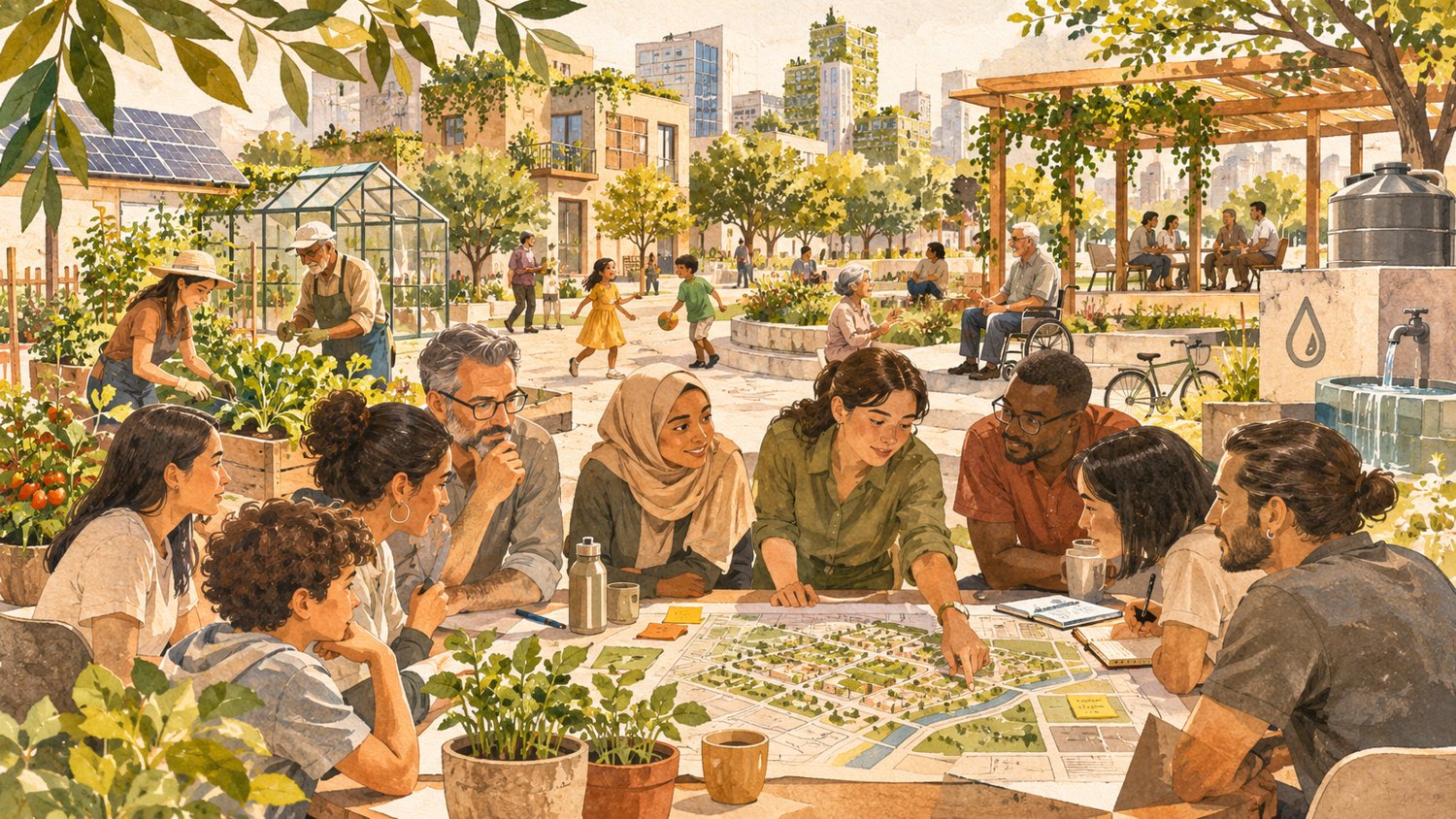
International Humanitarian Resilience Organization, is an independent, non-governmental organization working at the intersection of climate change, human mobility, and food systems. We believe that climate-induced vulnerability should not be addressed solely through a humanitarian lens, but through long-term resilience building, sustainable livelihoods, and community-led solutions.
We recognize that climate change is not merely an environmental challenge; it is also a multidimensional development issue that directly affects food security, economic development, social stability, and human mobility. For this reason, we adopt an integrated approach that brings together agriculture, livelihoods, research, technology, policy development, and field implementation to create sustainable and lasting impact.
Established in Türkiye with a regional and international perspective on global challenges, International Humanitarian Resilience Organization recognizes that climate-induced vulnerabilities do not stop at geographical borders. We embrace an approach that learns from local needs and experiences, draws on knowledge and good practices developed across different contexts, and supports the adaptation of effective solutions to diverse geographies and communities.
Why We Exist
Climate change is no longer a future risk, it is a global reality shaping the lives of millions today. Droughts, water scarcity, environmental degradation, and climate-related disasters not only reduce agricultural productivity but also undermine livelihoods, force people to move, and increase food insecurity. However, we do not see human mobility as a problem in itself. Rather, we recognize it as the consequence of unresolved challenges within climate resilience, development, and food systems. International Humanitarian Resilience Organization was established to help reverse this cycle.
Our ambition extends beyond responding to crises after they occur. We strive to help communities become better prepared before crises unfold by strengthening their productive capacities, supporting sustainable livelihoods, and reducing long-term dependency on external assistance.
What Change Do We Seek?
Climate change, humanitarian action, and development are often treated as separate fields. In reality, they are deeply interconnected and form different dimensions of the same system.
Climate change places increasing pressure on agricultural production and natural resources. Declining productivity weakens livelihoods and increases economic vulnerability. The loss of livelihoods accelerates human mobility, while displacement further intensifies food insecurity, poverty, and social fragility. We view these challenges not as isolated crises, but as interconnected elements of a single cycle.
Rather than addressing only one link in this chain, we seek to transform the system as a whole. By integrating research, innovative agricultural solutions, sustainable food systems, capacity development, resilient livelihoods, and community-led approaches, we aim to help communities become better prepared for future challenges instead of simply recovering after disasters have occurred.
We believe that genuine resilience is achieved not only through responding to emergencies, but by creating strong communities where people have reliable access to safe and nutritious food, sustainable livelihood opportunities, and the capacity to adapt to changing climate conditions.
Our work therefore focuses not only on addressing today’s humanitarian needs, but also on building the resilient communities of tomorrow.
What Makes Us Different?
International Humanitarian Resilience Organization does not aspire to be solely a research institution, solely an advocacy organization, or solely an implementing NGO. We believe in an integrated model that connects research with implementation, technology with social impact, and local knowledge with global experience.
Our work always begins with understanding community needs and identifying the systemic drivers of vulnerability. Through evidence-based research and continuous engagement with stakeholders, we design practical solutions and test them through pilot initiatives in real-world settings. We closely monitor implementation, evaluate outcomes, and use the lessons learned to continuously improve our programmes and methodologies. For us, every project represents more than a completed activity, it is part of an ongoing process of learning, innovation, and continuous improvement.
We transform field experience into research, research findings into policy recommendations, and successful pilot initiatives into scalable models that can be adapted across different communities, geographies, and humanitarian contexts.
For this reason, International Humanitarian Resilience Organization operates through a continuous cycle of learning rather than a linear process. We research, design, implement, measure, learn, and improve. This approach defines not only the way we work, but also the foundation of our institutional identity and our long-term vision for impact.
For us, true success is measured not by the amount of aid delivered, but by the number of people who no longer need it.
Our Founding Principle
Building resilience before vulnerability becomes displacement
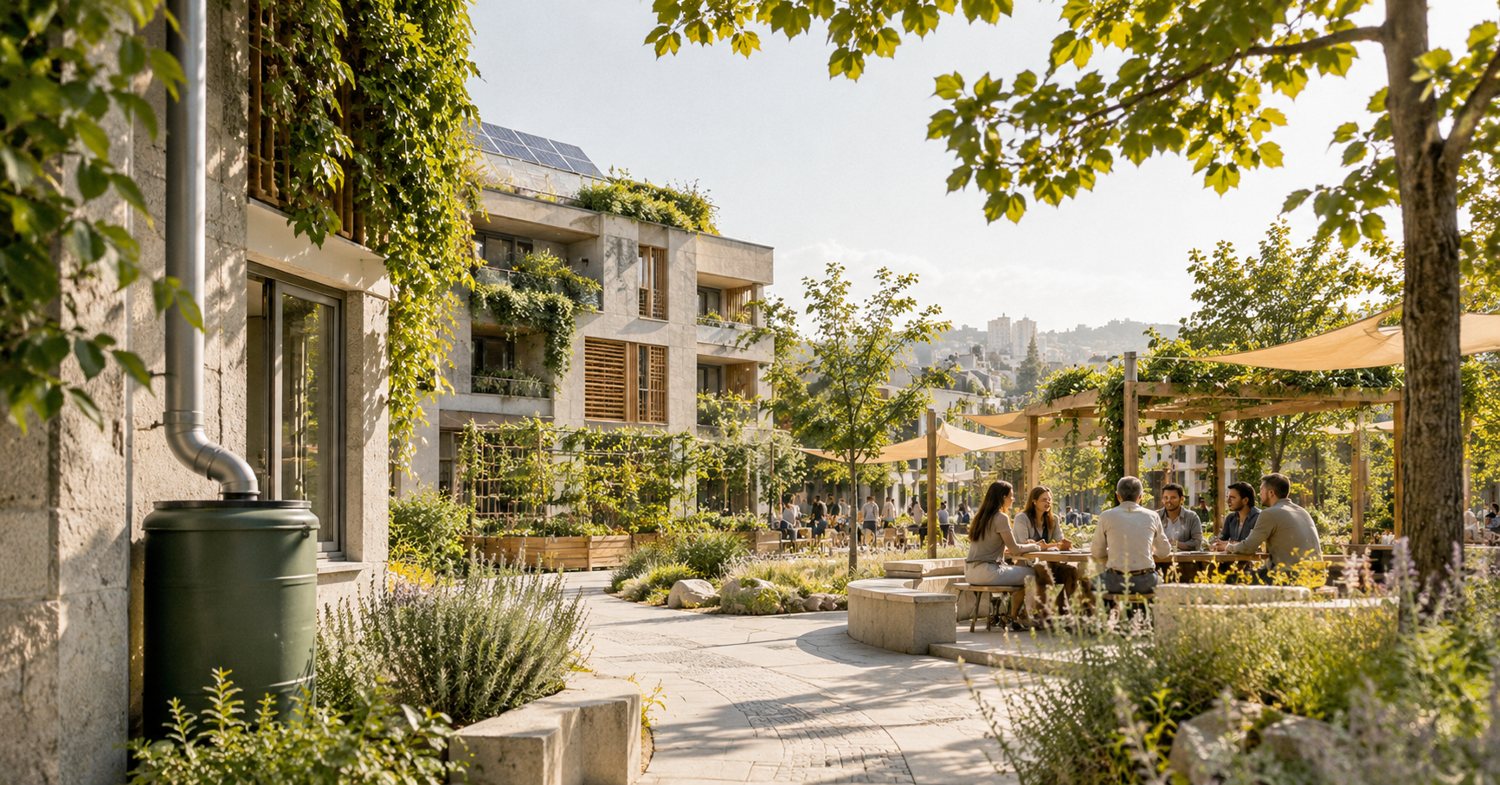
At International Humanitarian Resilience Organization, we believe that resilience is most effective when it is built before vulnerability becomes displacement. Climate change is no longer solely an environmental challenge; it is reshaping food systems, livelihoods, local economies, and patterns of human mobility across the world. As these pressures intensify, communities face increasing risks of economic fragility, food insecurity, displacement, and prolonged dependence on humanitarian assistance.
We believe these challenges should not be addressed as isolated crises. Human mobility is not simply a migration issue; it is often the visible consequence of deeper systemic challenges affecting climate resilience, sustainable livelihoods, food systems, and inclusive development. Lasting solutions therefore require integrated approaches that strengthen communities before vulnerability becomes displacement while also supporting recovery and resilience where displacement has already occurred.
For us, resilience is not limited to disaster response. It is the capacity of individuals, communities, and institutions to anticipate risks, adapt to change, recover from shocks, and continue building sustainable futures. We believe that stronger communities are created through knowledge, opportunity, productive capacity, local ownership, and long-term investment in people rather than through temporary interventions alone.
Community resilience lies at the heart of International Humanitarian Resilience Organization’s philosophy. We view climate adaptation, sustainable livelihoods, resilient food systems, and human mobility not as separate fields of work, but as interconnected pillars of a broader resilience ecosystem. Strengthening one without the others creates only temporary progress; strengthening them together enables communities to withstand future challenges while continuing to grow with dignity, self-reliance, and hope.
We also believe that meaningful change is achieved when research informs practice, innovation responds to real needs, local knowledge shapes solutions, and evidence supports better policy. Sustainable impact cannot be created by any single actor alone. It emerges through collaboration, shared learning, and long-term partnerships that bring together communities, governments, academia, civil society, the private sector, and international organizations around a common purpose.
Our ambition is not simply to implement projects or respond to humanitarian needs. We seek to contribute to systemic change by helping communities strengthen their own capacities, expand sustainable livelihood opportunities, adapt to changing conditions, and reduce long-term dependency on external assistance.
This founding principle defines who we are, why we exist, and how we approach every partnership, every programme, and every decision. It is the foundation upon which International Humanitarian Resilience Organization is built and the compass that will continue to guide our work as we grow.
Our Vision
We envision a world where communities are equipped to anticipate, withstand, adapt to, and recover from the challenges of a changing climate with dignity, opportunity, and resilience.
We aspire to a future where climate change no longer drives vulnerability into displacement, where sustainable livelihoods strengthen local economies, where resilient food systems support human well-being, and where communities possess the knowledge, capacity, and resources to shape their own futures.
In the world we envision, resilience is not measured by the ability to respond to crises alone, but by the capacity of people and institutions to prevent them, adapt to change, and create lasting prosperity through collaboration, innovation, and shared responsibility.
Our vision is a future in which community resilience becomes the foundation of sustainable development, enabling people not only to survive uncertainty, but to thrive despite it.
Our Mission
Our mission is to strengthen community resilience by advancing integrated solutions that connect climate adaptation, sustainable livelihoods, resilient food systems, and human mobility.
We generate evidence, foster innovation, support locally led action, and build strategic partnerships that enable communities to anticipate risks, adapt to changing conditions, recover from crises, and shape sustainable futures on their own terms.
Through research, collaboration, capacity development, policy engagement, and practical implementation, we seek to transform knowledge into action and action into long-term systemic change.
We are committed to helping communities become not only more resilient to future challenges, but also more capable of creating inclusive, sustainable, and self-reliant pathways for development.
Everything we do is guided by a simple belief:
Lasting resilience is built with communities, not for communities.
Our Core Values
Everything International Humanitarian Resilience Organization does is guided by a shared set of principles that shape our institutional culture, decision-making processes, and partnerships. These values are more than organizational ideals, they serve as the foundation for every project we develop, every partnership we establish, and every step we take in the field.
Human dignity lies at the heart of our work. We believe every individual has the right to live a safe, productive, and dignified life, and we design all of our initiatives around this principle.
We believe that lasting change can only be achieved through the active participation of communities. Rather than developing solutions for communities, we develop them with communities, recognizing local knowledge and experience as invaluable assets for sustainable development.
We value scientific knowledge, innovation, and technology as powerful drivers of positive social impact. However, we never regard technology as an end in itself, but as a tool for improving people’s lives and strengthening resilience.
We are committed to evidence-based decision-making. Research, data, measurable impact, and continuous learning are fundamental to our institutional development. We strive to be an organization that continuously learns, evolves, and grows from experience.
We prioritize long-term impact over short-term interventions. Sustainability; environmental, economic, social, and institutional, is embedded in every aspect of our work.
Transparency and accountability form the basis of the trust we build with our stakeholders. We manage our resources responsibly and conduct all of our activities with openness, integrity, and the highest ethical standards.
We recognize that no single organization can solve today’s complex global challenges alone. Collaboration, knowledge sharing, and co-creation are therefore integral to our institutional approach. We actively seek strong partnerships with governments, academia, civil society organizations, the private sector, and international institutions.For International Humanitarian Resilience Organization, these values define not only how we operate today, but also the kind of institution we aspire to become in the years ahead.